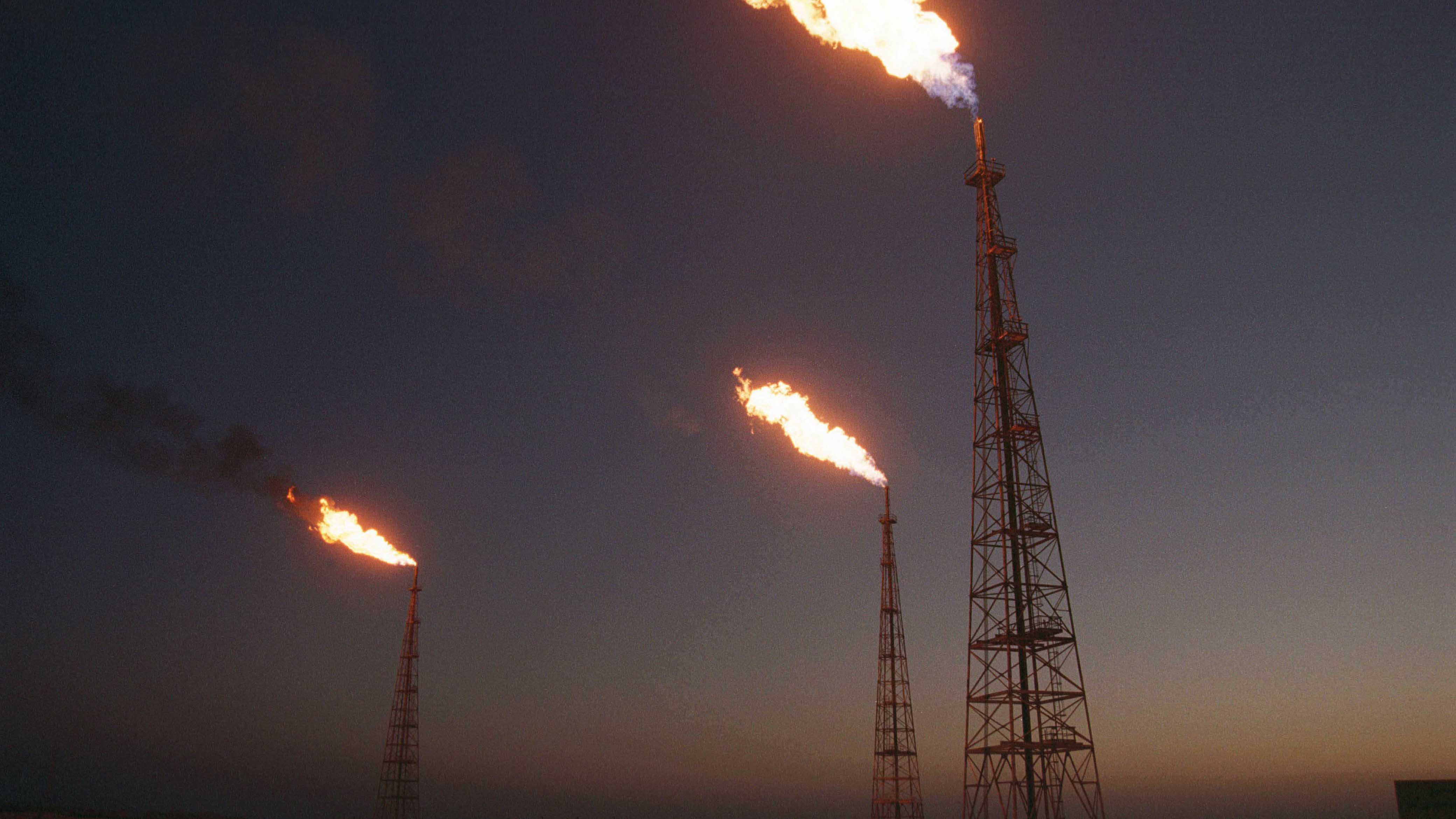
The intricate dance of global geopolitics frequently sends ripples through international markets, and few sectors feel this impact more acutely than crude oil. When it comes to the highly sensitive Middle East, tensions involving major players like the United States and Iran invariably place the world's energy supply under scrutiny. The potential for conflict in this vital region raises critical questions about oil supply disruptions and the resulting price spikes that could destabilize economies worldwide. Understanding the profound us iran oil impact requires a deep dive into the specific scenarios that analysts are closely watching.
The Geopolitical Crucible: Why Oil is Always in the Crosshairs
The Strait of Hormuz, a narrow waterway connecting the Persian Gulf to the open ocean, serves as a critical choke point for global oil shipments. Six oil-producing nations in the Middle East Gulf depend on unimpeded shipping access via this strait to reach world markets, making it arguably the most strategically important waterway for energy trade on the planet. Any significant disruption here would reverberate globally, illustrating the immediate link between regional stability and energy security.
Historically, during periods of heightened tension in the Gulf, such as previous analytical scenarios depicting localized conflicts, major oil export disruptions have sometimes been averted. This often occurs when belligerents, including Iran, perceive that their own vital interests—such as continuing their oil exports—are not fundamentally threatened. However, the current landscape presents a more complex picture. With sustained pressure on Iran, including alleged blows to its regional proxies and internal challenges, the calculus for Tehran could shift. A perceived existential threat might lead to actions previously deemed too escalatory, bringing the prospect of severe oil supply disruptions into sharper focus.
Washington's long-standing demands for Iran to fully abandon nuclear enrichment, accept stringent limits on its missile capabilities, and halt support for regional proxy groups underscore the deep-seated disputes. These unresolved issues continue to fuel an environment where military strikes or retaliatory actions remain a tangible, if undesirable, possibility.
Unpacking Potential Oil Disruption Scenarios
Analysts identify several key scenarios that could unfold, each with distinct implications for global oil markets. These range from targeted actions to broader regional conflicts, all contributing to the potential us iran oil impact.
Scenario 1: Targeting Iranian Oil Exports Directly
One direct approach involves efforts by the United States or its allies, such as Israel, to impede Iran's crude oil shipments. This could manifest in actions like blockading or seizing Kharg Island, Iran's principal facility for loading oil onto tankers, or intercepting oil tanker vessels transporting Iranian crude. Given that Iran's current exports, estimated at around 1.6 million barrels per day (mb/d), primarily flow to China, such an action would directly curtail a significant portion of its foreign exchange earnings.
While the direct target is Iranian oil, the global implications are far-reaching. Since crude oil is a globally fungible commodity, a disruption anywhere affects prices everywhere. A loss of Iranian barrels would compel China and other buyers to seek substitute supplies from the global market, driving up demand and consequently prices. Analysts estimate that even this relatively contained scenario could trigger an immediate increase of at least $10–12 in the global price of crude oil. Such a scenario, while impactful, is often considered reversible; operations against Iranian shipments could be halted, allowing export volumes to rebound, much like the market saw following the U.S. quarantine on Venezuelan oil shipments. However, the lingering effects of heightened insurance and war-risk premiums for shipping in the Gulf could keep prices elevated long after any physical supply interruption ceases.
Scenario 2: Iran's Response – Disrupting Arab Gulf Shipping
Perhaps the most concerning scenario involves Iran retaliating by actively disrupting Arab Gulf oil shipping through the Strait of Hormuz. This campaign would likely target the vital arteries of global oil trade, aiming to inflict maximum economic pain and leverage. Potential targets could include:
- The Strait of Hormuz: Iran possesses capabilities to mine the strait, deploy fast attack boats, or use anti-ship missiles to impede or halt tanker traffic. Even a temporary closure or significant threat would bring global shipping to a standstill.
- Key Export Terminals: Major terminals in Saudi Arabia, the UAE, and Kuwait are potential targets, disrupting the loading of millions of barrels of oil per day.
- Oil Tankers: Direct attacks on tankers carrying oil from other Gulf producers would dramatically escalate war-risk premiums, effectively making oil transport prohibitively expensive or too dangerous.
The scale of disruption in this scenario would be far more severe than merely targeting Iranian exports. It could impact multiple millions of barrels per day from several major producers, including Saudi Arabia, the UAE, Kuwait, and Iraq. The global price impact would be catastrophic, potentially leading to unprecedented spikes and triggering a major global energy crisis. Such an escalation would be driven by Iran's perception of an existential threat, where disrupting its adversaries' economic lifeline becomes a strategic imperative. The economic ramifications would extend far beyond oil prices, impacting trade, manufacturing, and consumer spending worldwide.
Scenario 3: Broader Regional Escalation and Production Outages
Beyond direct shipping disruptions, a full-scale regional conflict could lead to a broader degradation of oil infrastructure and production capacity. This could involve:
- Cyberattacks: Sophisticated cyberattacks on oil production facilities, pipelines, and export terminals across the Gulf could cripple operations without direct physical engagement.
- Onshore Facility Attacks: While often attributed to proxy groups, attacks on major onshore oil processing plants, like the 2019 drone and missile strikes on Saudi Aramco's Abqaiq and Khurais facilities, demonstrate the vulnerability of critical infrastructure. A direct or proxy attack originating from Iran could severely impact production volumes.
- LNG Export Outages: An often-overlooked consequence of Strait of Hormuz disruption is the impact on liquefied natural gas (LNG) exports, particularly from Qatar. A significant LNG outage would have profound effects on global gas markets, adding another layer of energy crisis.
The interplay of these scenarios suggests that while some actions might be reversible, others, particularly those targeting production infrastructure, could cause long-term damage, requiring extensive repairs and leading to prolonged supply shortages. How Geopolitics Drives Crude Oil Prices: Iran Standoff Explained details these complex interconnections.
Navigating the Price Spikes and Market Volatility
The mere prospect of US-Iran tensions can send oil markets into a frenzy. Recently, oil prices have shown extreme sensitivity to headlines, swinging dramatically with news of diplomatic progress or military posturing. International benchmark Brent crude, which had seen a significant decline from $81/bbl to $59/bbl, rapidly rebounded to around $70/bbl due to escalating tensions. Similarly, WTI prices, after falling from $78/bbl to $55/bbl, surged back.
This volatility underscores the role of market sentiment and speculation. Traders price in geopolitical risk, meaning that even the threat of disruption can inflate oil prices through "war-risk premiums." These premiums reflect the increased cost of doing business in a dangerous region, including higher insurance costs, longer shipping routes, and the general uncertainty surrounding future supply.
For businesses and consumers, navigating these unpredictable price spikes requires vigilance. Practical tips include:
- Hedging Strategies: Businesses dependent on oil can explore hedging mechanisms to lock in prices and mitigate future volatility.
- Diversifying Energy Sources: Governments and industries should accelerate efforts to diversify energy portfolios, reducing reliance on any single region or fuel type.
- Strategic Petroleum Reserves: The coordinated release from strategic reserves by major consuming nations can provide a temporary buffer against severe price shocks, though this is a short-term solution.
- Monitoring Geopolitical Developments: Staying informed on diplomatic efforts and regional stability indicators is crucial for anticipating market shifts.
Understanding these dynamics is vital, as Iranian Oil Exports at Risk: Global Market Impact & Price Outlook further elaborates on the broader economic consequences.
In conclusion, the ongoing tensions between the United States and Iran represent a profound and persistent risk to global oil markets. From direct blockades of Iranian exports to far more catastrophic disruptions of shipping in the Strait of Hormuz and potential damage to vital infrastructure, the scenarios paint a clear picture of potential price spikes and economic instability. While diplomatic efforts continue, the inherent volatility of the region demands constant vigilance and strategic planning from energy stakeholders worldwide. The us iran oil impact is not merely theoretical; it's a dynamic and evolving challenge that underscores the delicate balance between geopolitics and global energy security.